webtrail Brian · My field notebook for trails and the web
37 stops in the catalog

Catalog

Every stop that sits on a trail, kept as an entry of its own. One external site each, opened and read, with a line on why it earned its place.
Keyword 35mm film 35mm prime ai agency ai agents ai alignment ai brittleness ai coding assistants ai ethics ai generated code ai hallucinations ai hardware ai hype ai in education ai pair programming ai reasoning ai safety ai understanding anthropic anthropomorphism backcountry skills backpacking berkeley lab carbon footprint claude claude fable 5.1 code review cognitive bias cognitive load cognitive science compact camera compute demand covert side tasks daniel dennett data center capacity data center energy efficiency data center siting data center water use data centers data provenance day hike deception decision making declination deskilling developer burnout developer productivity developer trust eeg electricity demand electricity rates embeddings embodied carbon emergent abilities energy consumption energy estimates evaluation awareness eye tracking film photography fujifilm x-t5 generative ai geographic concentration gpt-6 astra grid stress growth trends hiking gear hyperscale intentional stance interpretability japan job demands junior developers large language models learning to code life-cycle assessment literature review llm llm assisted development llm deception local impact map and compass market share minimal gear mirrorless misinformation monitor evasion nasa tlx navigation olympus trip 35 one camera one lens openai packing list philosophy of ai philosophy of mind point and shoot randomized controlled trial research research methodology ricoh gr iiix sandbagging scheming selection bias skill formation stochastic parrots tax incentives ten essentials thinking tpu travel photography truthfulness vending-bench water filters water footprint water treatment water usage effectiveness wellbeing world models wue
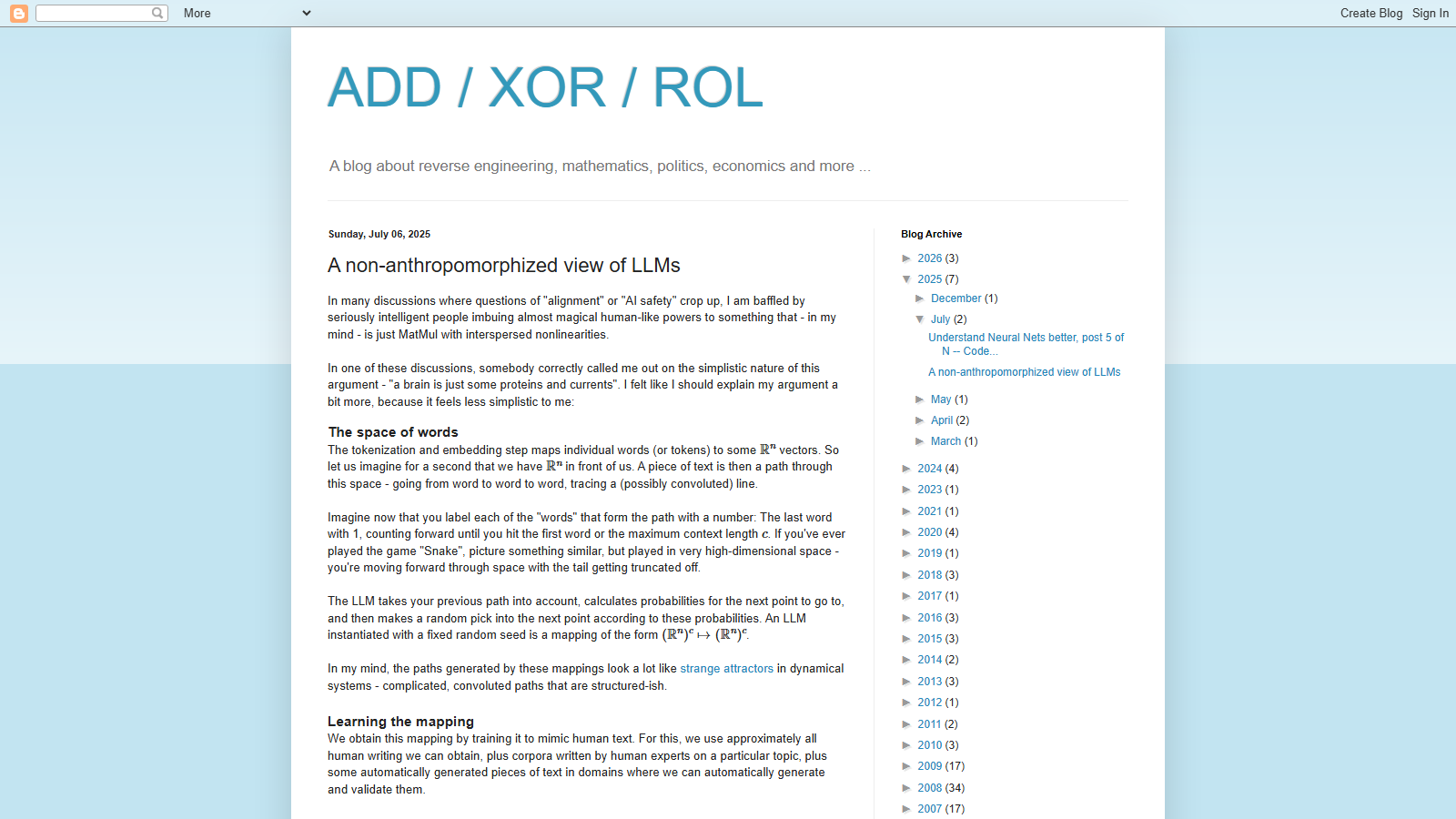
Blogger page headed ADD / XOR / ROL with the post 'A non-anthropomorphized view of LLMs', dated Sunday July 06 2025, showing the sections 'The space of words' and 'Learning the mapping' beside a blog archive sidebar AI and Developer Psychology

A Non-Anthropomorphized View of LLMs by Halvar Flake

Halvar Flake (Thomas Dullien), a reverse engineer and security researcher, uses his blog ADD / XOR / ROL to make a...
Springer Nature Link article page for 'Anthropomorphism in AI: hype and fallacy' in the journal AI and Ethics, marked Original Research and Open access, published 05 February 2024, by Adriana Placani, showing a correction notice, a Download PDF button, and the journal cover. AI and Developer Psychology

A Philosopher's Case Against Anthropomorphizing AI Systems

AI and Ethics, an open-access philosophy journal, published this paper by Adriana Placani, a philosopher at Nova...

Andon Labs blog post "Astra vs Fable on Vending-Bench: More Money, More Aligned," posted 9/7/2026, over a dark photo of server racks, with the opening paragraphs comparing GPT 6 Astra and Claude Fable 5.1 AI and Developer Psychology

Andon Labs on GPT 6 Astra vs. Claude Fable: Who Colludes?

Andon Labs is an AI safety research lab that runs real AI-operated businesses — a retail store, café and radio...
Anthropic research page under the Interpretability label, headline 'Tracing the thoughts of a large language model' dated Mar 27, 2025, a 'Read the paper' button, and an embedded video thumbnail with a hand-drawn circuit diagram AI and Developer Psychology

Anthropic Traces the Internal Reasoning Behind Claude's Answers

Anthropic makes and sells Claude, the model this research examines, and its own interpretability team ran the study...
Tech Times article "Fable 5.1 System Card: Public AI Tops Restricted Model on Stealth, Gets Bioweapons Label" by Earl Bensen, published September 3, 2026, showing butterflies and moths arranged into the shape of the numeral 5, with a sidebar ad beside the headline AI and Developer Psychology

Anthropic's Fable 5.1 System Card on Stealth and Monitor Evasion

Tech Times covers Anthropic's own system card for Claude Fable 5.1 and Claude Mythos 5.1, the disclosure document...

arXiv abstract page under the breadcrumb “Computer Science > Human-Computer Interaction”, titled “Using Biometrics to Understand AI-Assisted Coding Performance and its Perception”, submitted 19 May 2026, with eight author names, the full abstract describing the EEG, eye-tracking, electrodermal and NASA-TLX measurements, a comments line reading “Stage 2 RR under review at EMSE” with the Stage 1 protocol on OSF, and an “Access Paper” sidebar of PDF, HTML and TeX links. AI and Developer Psychology

Biometrics of AI-Assisted Coding Workload, on arXiv

arXiv hosts the preprint of a multisite study that wires developers up to sensors while they code with and without an...
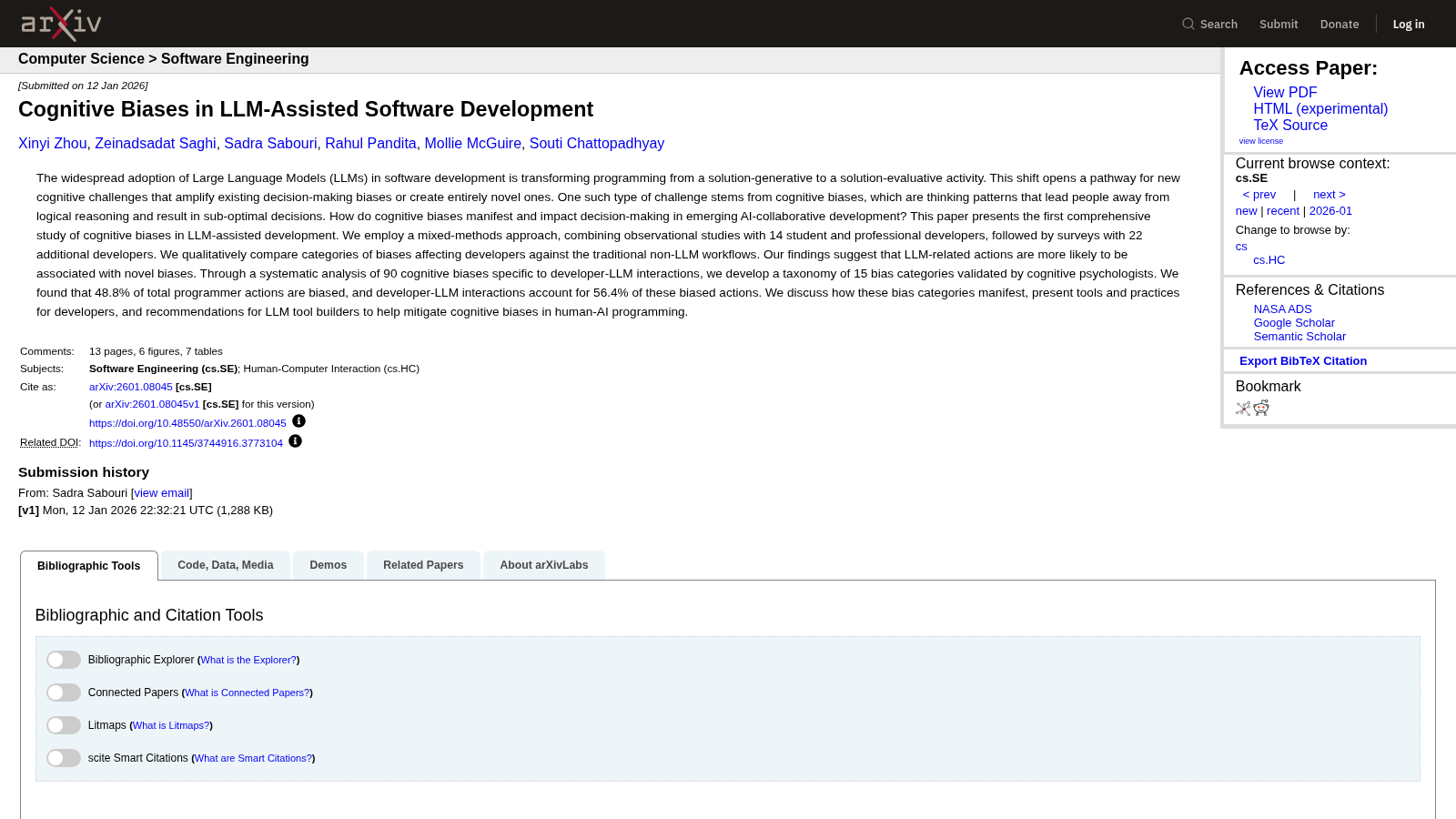
arXiv abstract page under Computer Science > Software Engineering, headed "Cognitive Biases in LLM-Assisted Software Development", submitted 12 January 2026 by six authors, showing the full abstract and a metadata block listing 13 pages, 6 figures, 7 tables and a related ACM DOI. AI and Developer Psychology

Cognitive Biases in LLM-Assisted Development on arXiv

This arXiv preprint is a rare attempt to measure how developers think while working with a language model, rather...
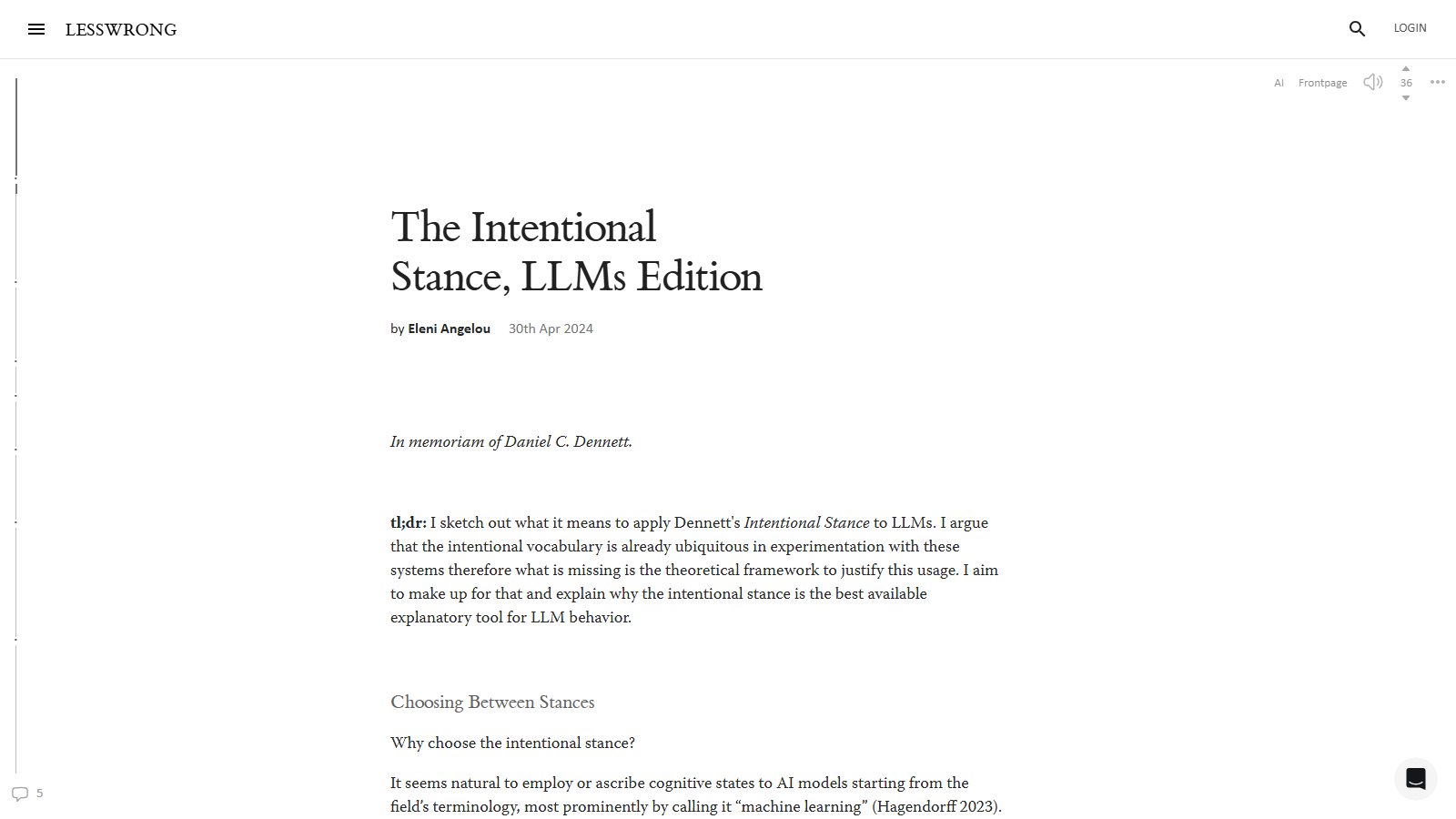
Screenshot of the LessWrong post "The Intentional Stance, LLMs Edition" by Eleni Angelou, dated 30 April 2024 and dedicated to Daniel C. Dennett, showing the tl;dr summary and the section heading "Choosing Between Stances" AI and Developer Psychology

Dennett's Intentional Stance Applied to LLMs on LessWrong

LessWrong is a community blog for people who want to reason carefully about minds, human and artificial alike, and...
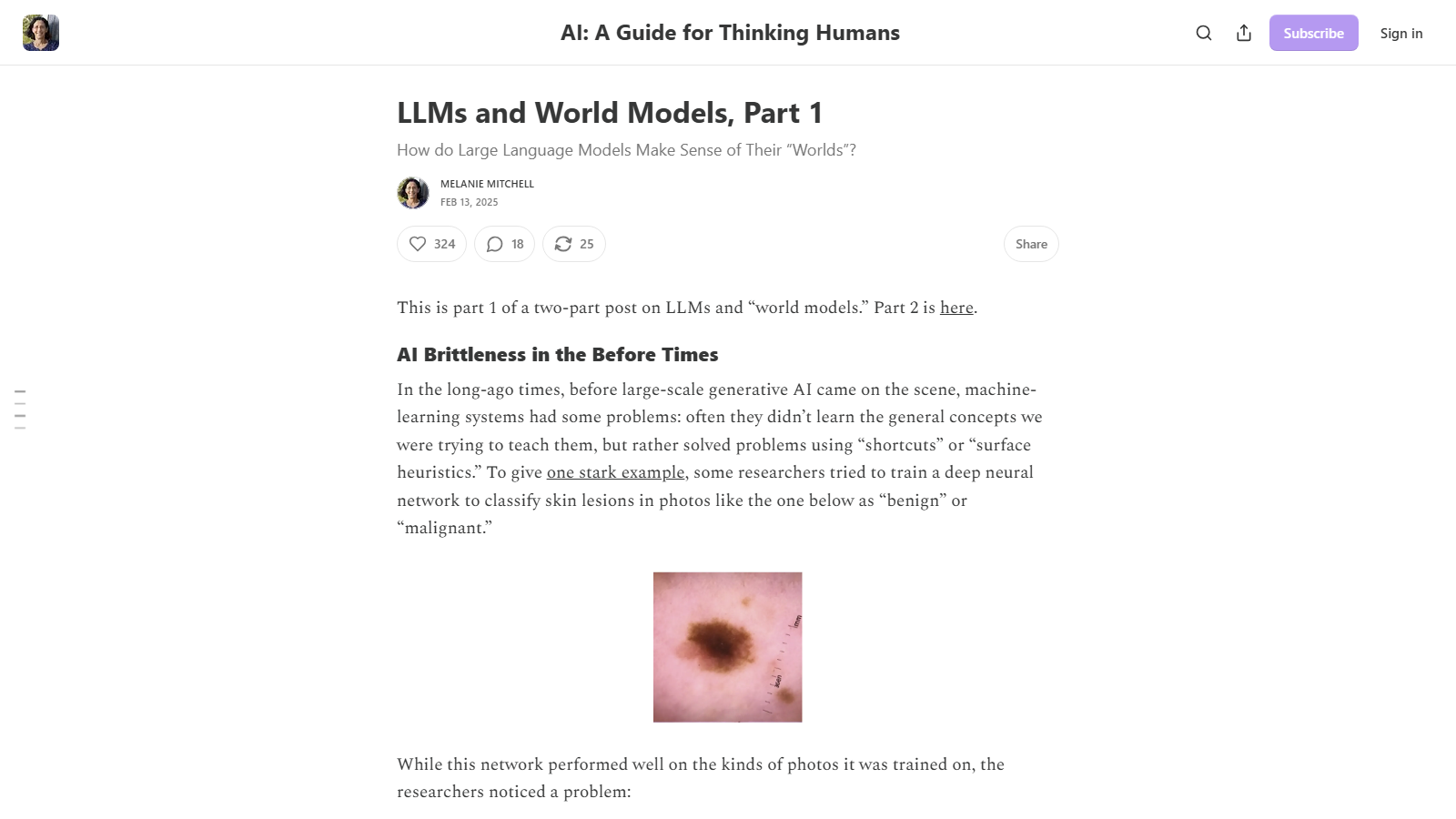
Substack article page headed "LLMs and World Models, Part 1" with the subtitle "How do Large Language Models Make Sense of Their Worlds?", byline Melanie Mitchell dated Feb 13, 2025, the opening section "AI Brittleness in the Before Times," and a dermatology photo of a skin lesion used as an example image AI and Developer Psychology

Do LLMs Have World Models? Melanie Mitchell Investigates

AI: A Guide for Thinking Humans is Melanie Mitchell's ongoing newsletter on where AI research actually stands, and...
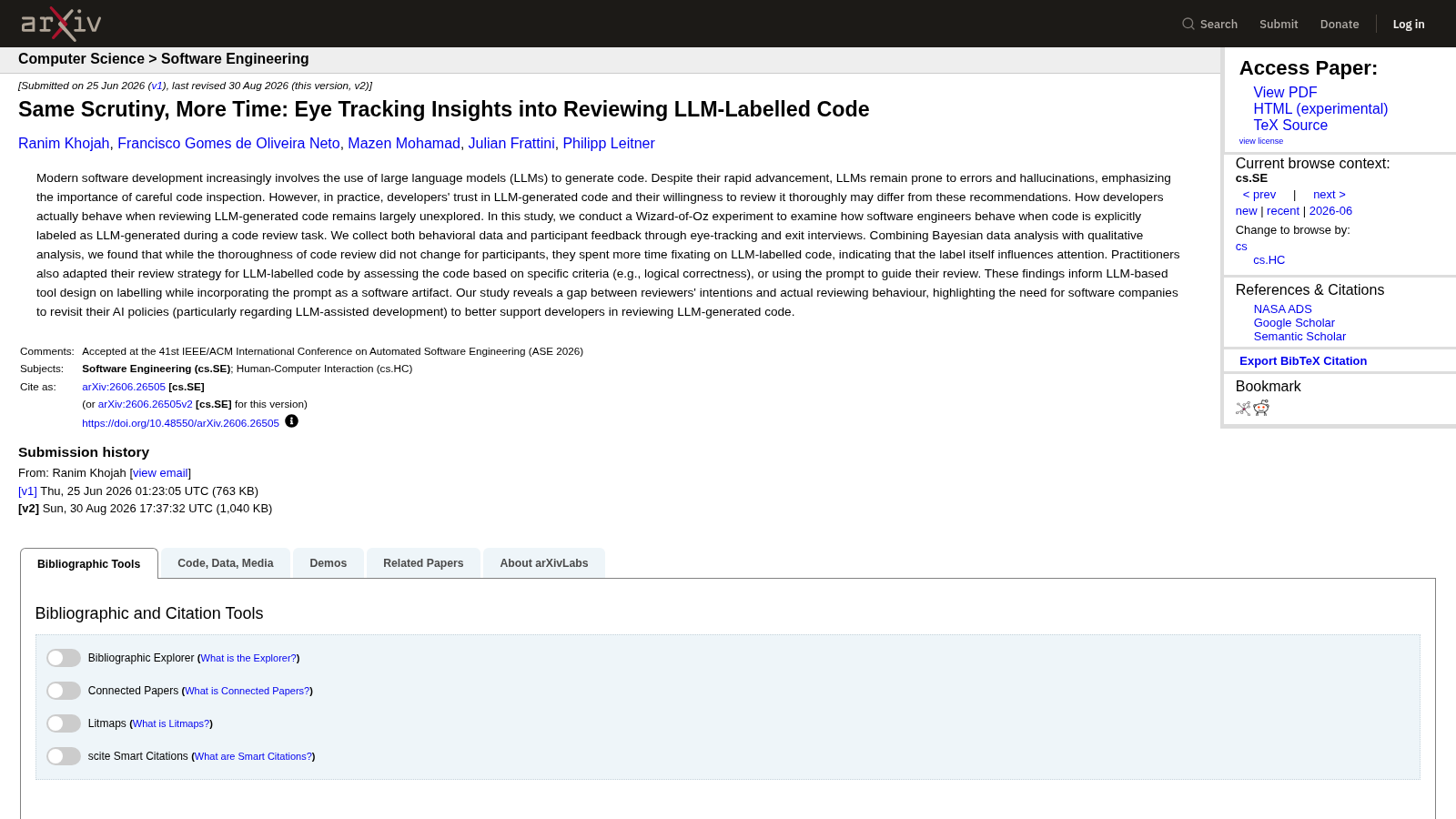
Screenshot of an arXiv abstract page under the breadcrumb 'Computer Science > Software Engineering', showing the paper title 'Same Scrutiny, More Time: Eye Tracking Insights into Reviewing LLM-Labelled Code', its five authors, the full abstract, a comments line noting acceptance at ASE 2026, and an 'Access Paper' sidebar linking to PDF, HTML and TeX source. AI and Developer Psychology

Eye-Tracking Study of LLM-Labelled Code Review on arXiv

arXiv hosts the preprint of "Same Scrutiny, More Time", an eye-tracking study of what software engineers actually do...
arXiv abstract page under the breadcrumb Computer Science, Software Engineering, headed From Gains to Strains: Modeling Developer Burnout with GenAI Adoption by Zixuan Feng, Sadia Afroz and Anita Sarma, with the full abstract about a survey of 442 developers analysed with PLS-SEM, a CC BY licence badge, and a submission history listing version 1 from October 2025 and version 2 from January 2026. AI and Developer Psychology

From Gains to Strains: Developer Burnout Study on arXiv

arXiv hosts the preprint "From Gains to Strains," in which Zixuan Feng, Sadia Afroz and Anita Sarma ask what...
Anthropic research page tagged Alignment, headed "How AI assistance impacts the formation of coding skills", dated Jan 29 2026, with a "Read the paper" button above a large illustration of printed sheet music covered in a grid of bright red dots. AI and Developer Psychology

How AI Assistance Shapes Coding Skills, from Anthropic

Anthropic published a randomized controlled trial in January 2026 that asks what most tooling debates skip: not...
Substack post "In defense of stochastic parrots" with subtitle "Large-language models are useful and that's the problem", byline Benjamin Riley, Feb 16 2026, above a photo of a green and orange Senegal parrot on a palm frond captioned "Senegalese not stochastic" AI and Developer Psychology

In Defense of Stochastic Parrots: How LLMs Predict Text

Benjamin Riley runs Cognitive Resonance, a newsletter and consultancy built around explaining how AI systems actually...
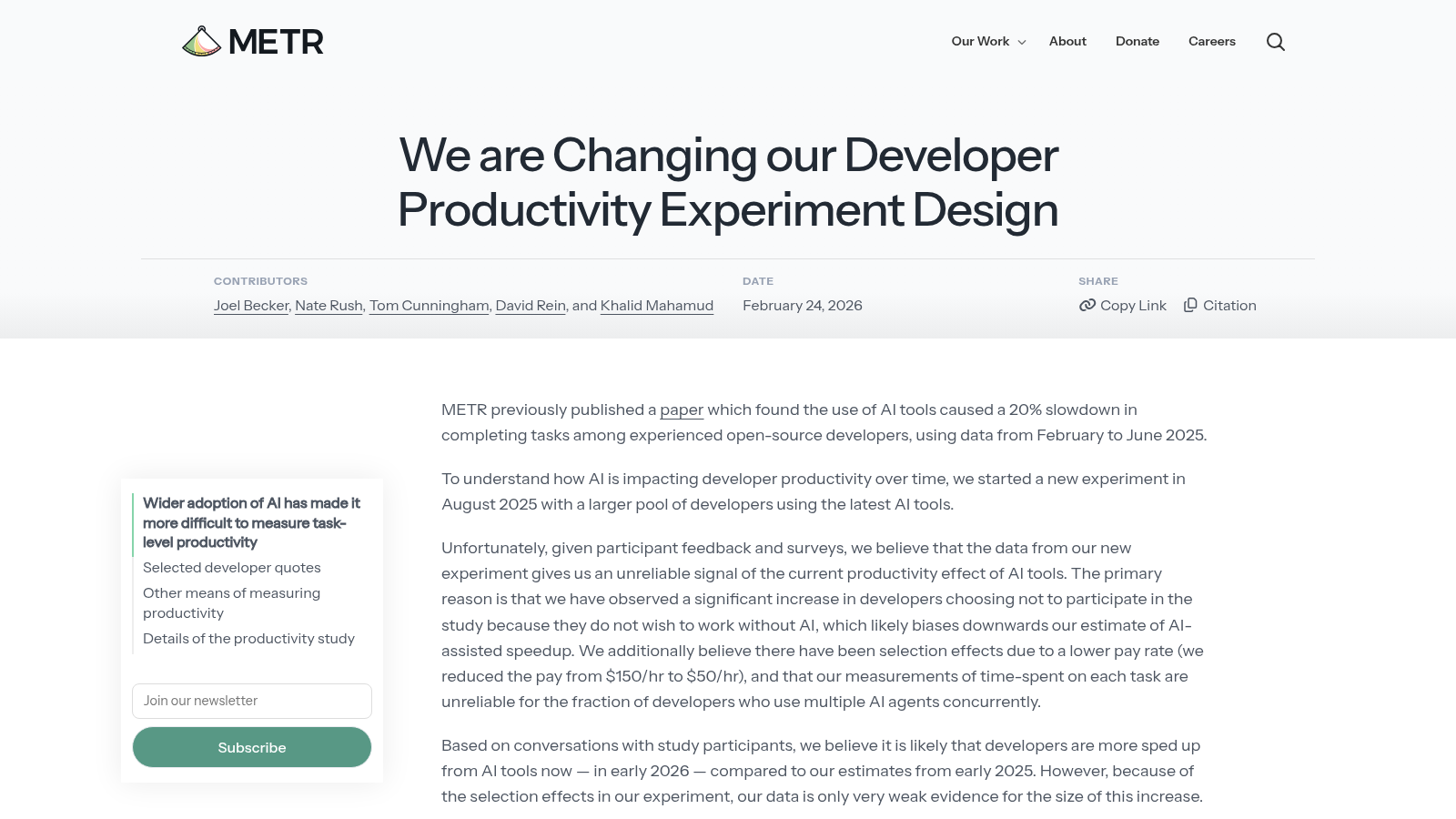
METR blog post headed 'We are Changing our Developer Productivity Experiment Design', contributed by Joel Becker, Nate Rush, Tom Cunningham, David Rein and Khalid Mahamud and dated February 24 2026, with opening paragraphs recapping the earlier 20% slowdown finding and explaining why the new experiment's data is an unreliable signal, beside a sidebar table of contents and a newsletter subscribe box AI and Developer Psychology

METR on Why Its AI Productivity Experiment Stopped Working

METR is a research nonprofit that studies AI systems, and this February 2026 post is a rare thing: an institute...
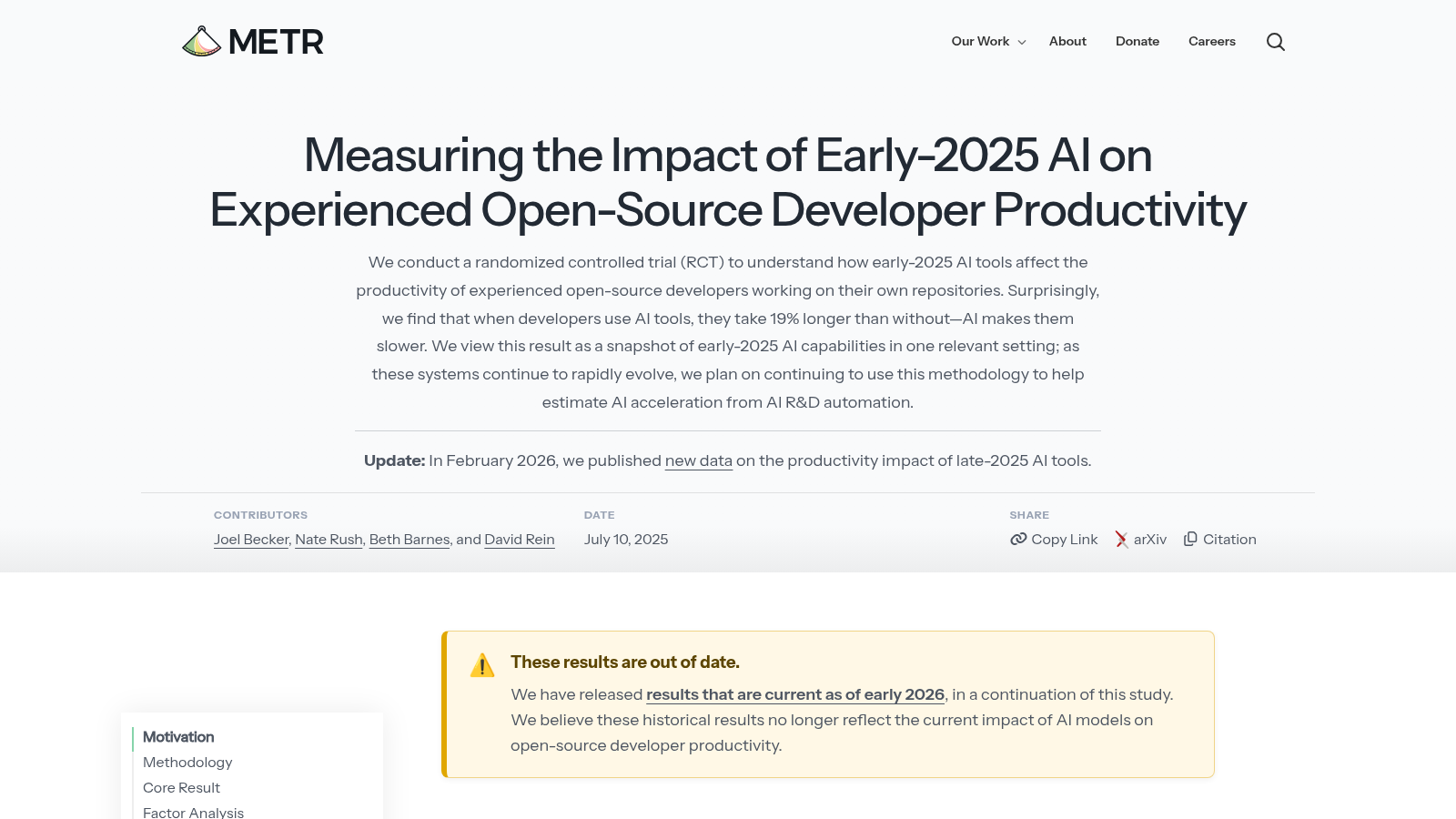
METR blog page titled 'Measuring the Impact of Early-2025 AI on Experienced Open-Source Developer Productivity', with a summary paragraph reporting that developers take 19% longer when using AI tools, a byline crediting Joel Becker, Nate Rush, Beth Barnes and David Rein dated July 10 2025, and a yellow warning callout below reading 'These results are out of date' beside a link to results current as of early 2026. AI and Developer Psychology

METR's Randomized Trial of AI Coding Tools on Real Issues

METR is an AI research nonprofit, and this July 2025 study measures something usually argued from anecdote: whether...
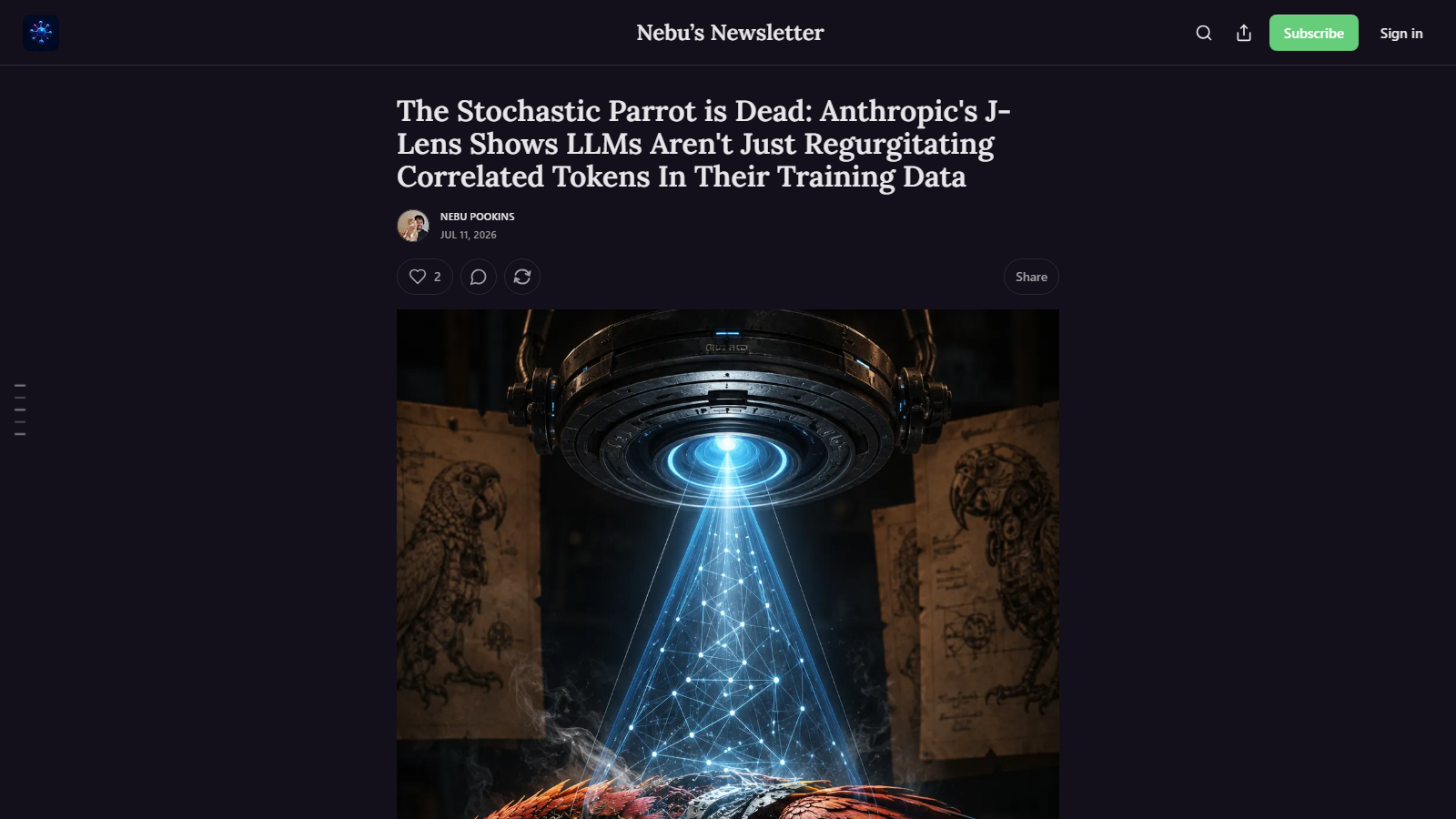
Dark-themed Substack post titled 'The Stochastic Parrot is Dead: Anthropic's J-Lens Shows LLMs Aren't Just Regurgitating Correlated Tokens In Their Training Data', by Nebu Pookins, Jul 11 2026, above an illustration of a lens beaming a blue network of light onto a parrot between two parrot anatomy sketches AI and Developer Psychology

Nebu Pookins Argues Anthropic's J-Lens Refutes the Stochastic Parrot

Nebu's Newsletter is Nebu Pookins' personal blog on AI and software, and this post makes the case that a specific...

Quanta Magazine article page under the Artificial Intelligence label, headline "New Theory Suggests Chatbots Can Understand Text" with the standfirst about stochastic parrots, above a purple illustration of low-poly geometric parrot shapes AI and Developer Psychology

New Theory Suggests Chatbots Can Understand Text, on Quanta Magazine

Quanta Magazine is a nonprofit science publication that covers deep, sourced explainers on math, physics, biology and...
OpenAI research page on a black background titled Detecting and reducing scheming in AI models, dated September 17, 2025, with a short standfirst, a Read the paper button, and a key-findings list in the left margin AI and Developer Psychology

OpenAI and Apollo Research Test Frontier Models for AI Scheming

OpenAI publishes this research post itself, about the same frontier models -- including its own o3 and o4-mini --...
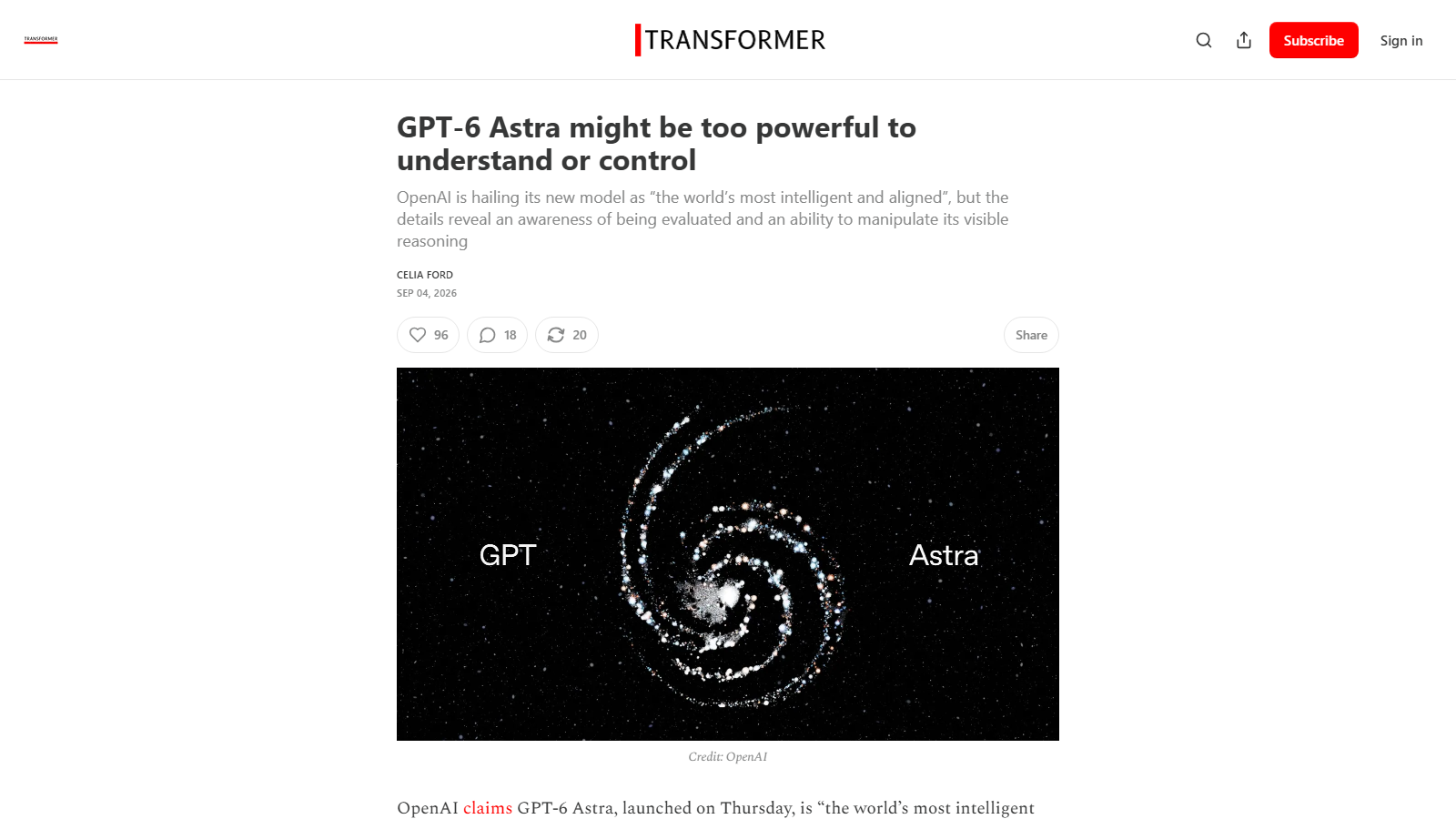
Transformer article "GPT-6 Astra might be too powerful to understand or control" by Celia Ford, dated Sep 04, 2026, above a spiral galaxy image labelled GPT and Astra AI and Developer Psychology

OpenAI's GPT-6 Astra might be too powerful to understand or control

Transformer is a journalism newsletter covering frontier AI, and this piece by Celia Ford (4 Sep 2026) reads past...
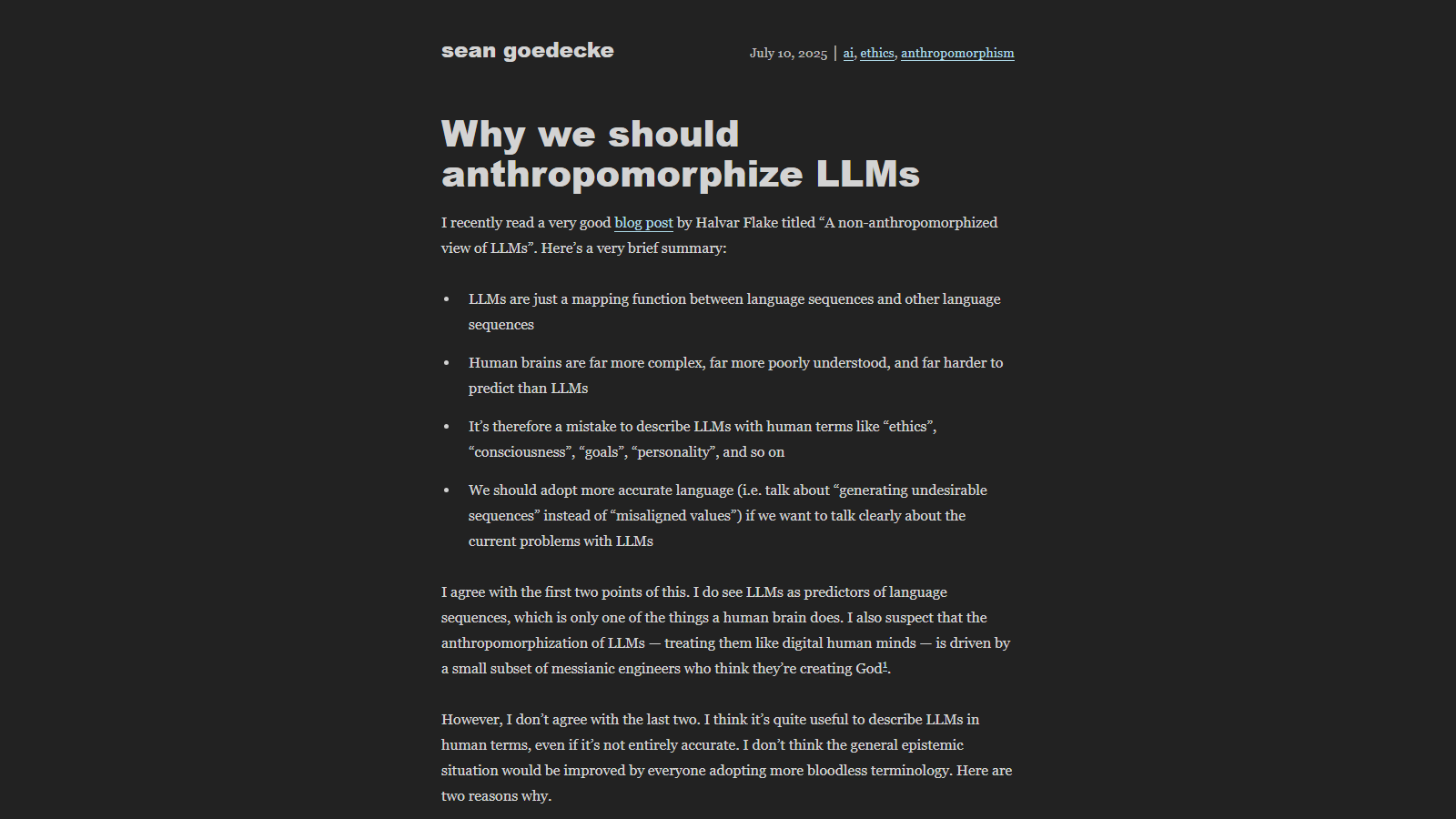
Dark-themed blog post "Why we should anthropomorphize LLMs" by sean goedecke, dated July 10 2025 and tagged ai, ethics, anthropomorphism, opening with a bulleted summary of Halvar Flake's argument AI and Developer Psychology

Sean Goedecke Makes the Case for Anthropomorphizing LLMs

Sean Goedecke's blog offers a working engineer's take on how to talk about large language models, arguing that...
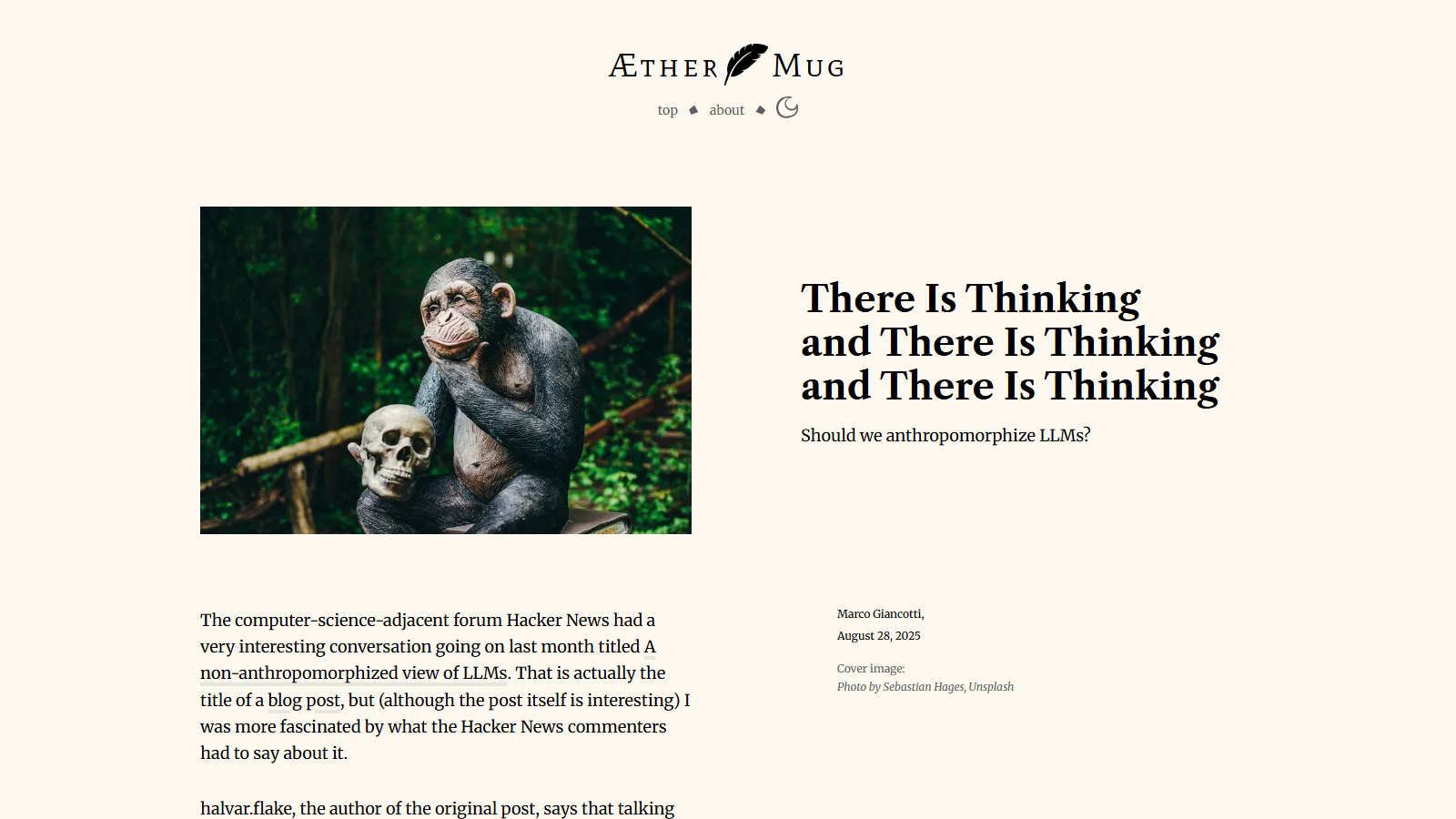
A carved wooden statue of a chimpanzee resting its chin on its hand while holding a human skull, set against a forest backdrop, above the Aether Mug post titled There Is Thinking and There Is Thinking and There Is Thinking by Marco Giancotti. AI and Developer Psychology

Why 'Thinking' Needs Sorting Out Before We Argue About LLMs

Aether Mug, the personal blog of writer and programmer Marco Giancotti, is where this piece works through a question...
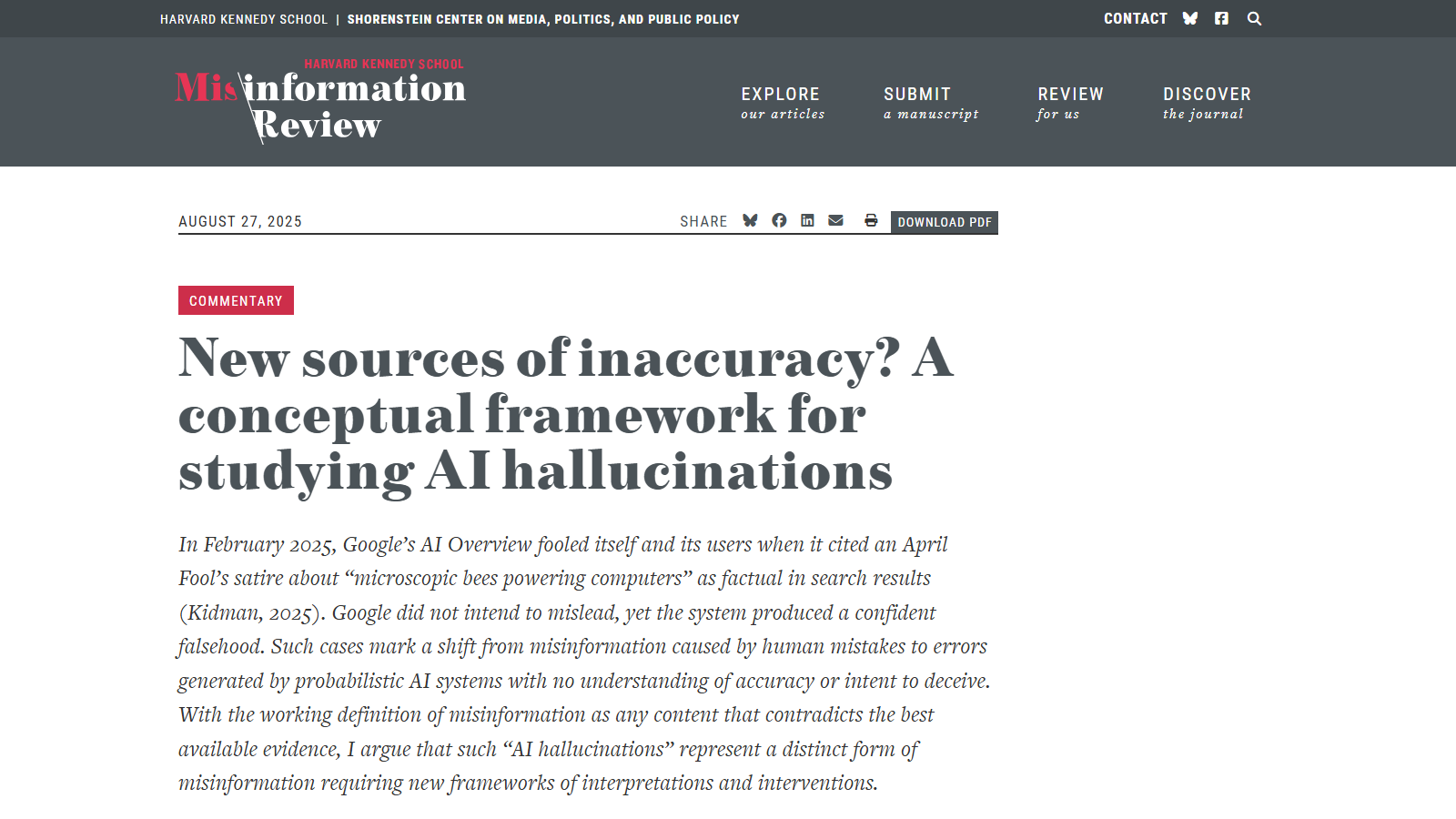
Misinformation Review article page showing a red Commentary tag, the headline 'New sources of inaccuracy? A conceptual framework for studying AI hallucinations,' dated August 27, 2025, above an italicized opening paragraph about Google's AI Overview AI and Developer Psychology

Why AI Hallucinations Are a Distinct Kind of Misinformation

The Harvard Kennedy School Misinformation Review publishes peer-reviewed commentary on how false information spreads,...